


SCOTUS Cases to Watch in the Upcoming Term
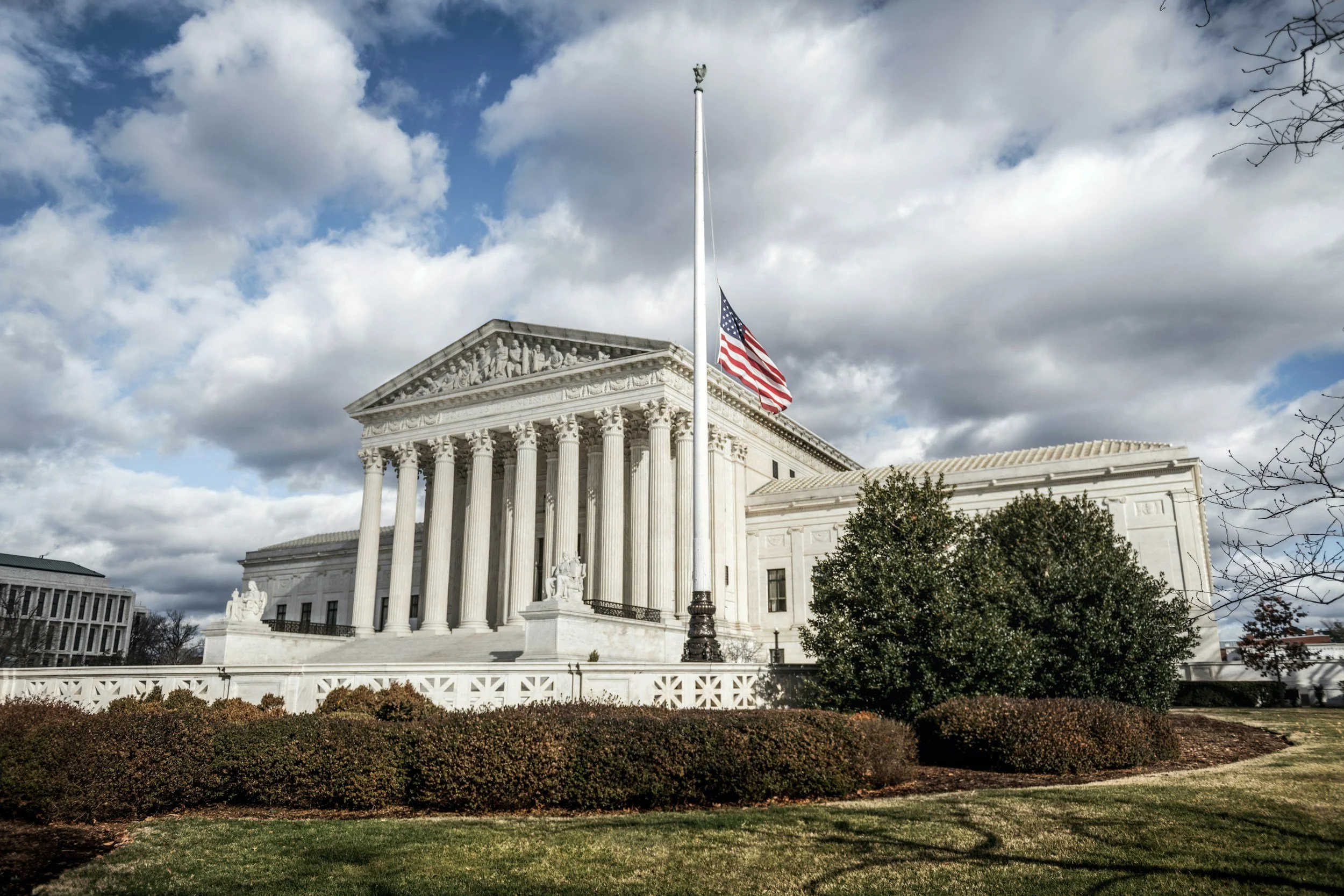
The Supreme Court opened its 2026–27 term on October 5 with a docket built around religion, guns, parental rights, voting and the reach of old precedents. Several cases could reshape settled law: whether AR-15-style rifles are protected "arms," whether a 1970 ruling allowing six-person criminal juries survives, and how far states can go in excluding religious schools from public programs.
The docket is still filling. As of late summer the Court had about 24 argued cases on its calendar, roughly 40% of a typical 55–60 case term, and none yet involved a major Trump administration policy. Expect immigration detention, spending fights, and post-midterm election disputes to arrive on the emergency docket.
| Case | Issue | Argument |
|---|---|---|
| St. Mary Catholic Parish v. Roy No. 25-581 | Religious preschools excluded from Colorado universal pre-K | Nov. 3 |
| Grand v. City of University Heights No. 25-965 | Zoning limits on prayer in a private home | Nov. 30–Dec. 9 sitting |
| Viramontes v. Cook County / Grant v. Higgins Nos. 25-238, 25-566 | Bans on AR-15-style rifles | Nov. 30–Dec. 9 sitting |
| RNC v. Mi Familia Vota No. 25-1017 | Documentary proof of citizenship to register | Nov. 30–Dec. 9 sitting |
| Int'l Partners for Ethical Care v. Ferguson No. 25-840 | Parents' standing to challenge gender-care laws for minors | Dec. 7 |
| Kian v. Florida No. 25-6623 | Six-person juries in felony trials | TBA |
| BOP transgender inmates Emergency application | Hormone therapy in federal prisons | Pending |
Religion: public money and private worship
St. Mary Catholic Parish v. Roy
The term's marquee religion case pits Catholic preschools against Colorado's universal pre-K program, which pays for 15 free hours a week at participating public or private schools. To join, schools must sign a nondiscrimination agreement covering religious affiliation, sexual orientation and gender identity. Colorado lets faith-based schools prioritize families of their own faith but not turn away LGBTQ families.
The parishes want to admit only families who support Catholic teaching on sex and gender, and argue the First Amendment requires an exemption. The Tenth Circuit sided with Colorado under Employment Division v. Smith (1990), finding the law generally applicable. The justices declined to reconsider Smith itself; they will instead decide how their precedents apply when a state excludes religious institutions from public benefits.
Why it matters: A win for the parishes would extend the Trinity Lutheran–Espinoza–Carson line, which barred states from excluding religious schools solely for being religious, to cases where the exclusion stems from an antidiscrimination condition. Critics say that would let taxpayer funds flow to schools exempt from rules everyone else follows.
Grand v. City of University Heights
Daniel Grand, an Orthodox Jew in suburban Cleveland, invited about 15 friends to pray as a minyan in his home. City officials told him that made his house a "synagogue" requiring a special-use permit and sent a cease-and-desist letter. Lower courts dismissed his suit as unripe because he never got a final zoning decision.
The question is whether a credible government threat that chills worship can be challenged immediately, or whether land-use finality rules from Williamson County (1985) force a plaintiff through the zoning process first. The answer will shape how quickly religious groups can get into federal court over local zoning.
Guns: are AR-15s protected "arms"?
Viramontes v. Cook County and Grant v. Higgins
These consolidated cases are the Court's first full look at bans on AR-15-style rifles, the most popular rifle in the country and the centerpiece of state "assault weapon" laws. Viramontes challenges Cook County, Illinois, which criminalizes selling, transferring or possessing such rifles; Grant challenges Connecticut's ban.
The Seventh Circuit upheld Cook County's law by concluding that AR-15s are not "arms" under the Second Amendment at all, relying on its 2023 Bevis v. City of Naperville decision and the history-and-tradition test from New York State Rifle & Pistol Association v. Bruen (2022). The challengers say the court misapplied Bruen and ignored District of Columbia v. Heller (2008), which protects weapons in common use.
Why it matters: Roughly 10 states plus several localities ban AR-15-style rifles. A ruling for the challengers would likely doom those laws and set the first clear limit on what kinds of firearms governments may prohibit since Heller. A ruling for the governments would confirm wide room to regulate semiautomatic rifles. Arguments are set for the sitting that runs Nov. 30 to Dec. 9.
Gender identity and parental rights
International Partners for Ethical Care v. Ferguson
Parents of children with gender dysphoria are challenging Washington state laws that, among other things, let youth shelters skip notifying parents when a minor is seeking "protected health care services," including gender-affirming care. Instead, shelters contact the state's children's agency, which must try in good faith to reach the family. A related law lets minors 13 and older get outpatient mental health care without parental consent.
The Court granted review on June 29, 2026, on a narrow question: whether parents have standing to sue over a law that displaces their role in a child's gender transition, before their own child has run away or sought treatment. The Ninth Circuit said no. Argument is set for Dec. 7.
Why it matters: The case continues a run of parental-rights disputes after Mahmoud v. Taylor (2025), which let parents opt children out of LGBTQ-themed lessons. A ruling for the parents would open federal courts to pre-enforcement challenges against school and state gender-identity policies nationwide; supporters of the laws warn it could undercut protections for LGBTQ youth.
Transgender federal inmates (emergency application)
On the emergency docket, the Trump administration has asked the Court to let the Bureau of Prisons end hormone therapy and social accommodations for transgender inmates. Judge Royce Lamberth has blocked the policy, most recently on Aug. 26, finding the bureau likely violated the Administrative Procedure Act, and a divided D.C. Circuit panel refused to pause his order. The inmates filed their response Oct. 8; a ruling could come any day. The bureau said in 2025 it was providing hormone therapy to more than 600 inmates.
Both cases arrive after the Court upheld Tennessee's ban on gender-affirming care for minors in United States v. Skrmetti (2025) and state restrictions on transgender athletes.
Voting: proof of citizenship
Republican National Committee v. Mi Familia Vota
Arizona requires new registrants to show documentary proof of citizenship and directs county recorders to audit voter rolls against state and federal databases. The Ninth Circuit held that the National Voter Registration Act, the 1993 "motor voter" law that contains no proof-of-citizenship requirement, preempts the Arizona rule.
Why it matters: Several states are pursuing similar requirements, and President Trump has pushed Congress to pass the SAVE Act, which would impose one nationally. Supporters say the rules keep noncitizens off the rolls; opponents say millions of eligible citizens lack ready access to a passport or birth certificate. The case will be argued just weeks after the Nov. 3 midterms, with the ruling likely in place before the 2028 cycle.
Precedents on the line
Kian v. Florida: six-person juries
The Court granted review on June 15, 2026, to decide whether a defendant charged with a serious felony is entitled to a 12-person jury. Hamed Kian was convicted by a unanimous six-person jury of practicing chiropractic medicine with a suspended license. He argues that Ramos v. Louisiana (2020), which required unanimous verdicts in state courts, undermined Williams v. Florida (1970), which approved six-person juries.
Why it matters: Florida and five other states still use fewer than 12 jurors in some criminal trials. Florida tries all noncapital crimes before six-person juries, and about 5,000 of its convictions are pending on direct appeal. Overruling Williams would be one of the term's clearest changes in the law, and Florida is already asking the Court to hold a stack of similar petitions until Kian is decided.
Other doctrines in play
Agency enforcement: Department of Labor v. Sun Valley Orchards extends SEC v. Jarkesy (2024). The Third Circuit held the Labor Department cannot use in-house judges to fine a farm accused of abusing H-2A guest workers and must sue in federal court instead. A ruling for the farm would push more federal enforcement out of agency tribunals.
Free exercise: St. Mary Catholic Parish leaves Employment Division v. Smith intact on paper, but a broad ruling could narrow how often Smith's "generally applicable" rule protects state laws.
Other Notable Cases
| Case | Issue | Stakes |
|---|---|---|
| Suncor Energy v. Boulder County No. 25-170 | Whether federal law blocks state-law climate damage suits against oil companies | Could end dozens of climate tort suits by cities and states; argued Oct. 5 |
| Crowther v. Board of Regents No. 25-183 | Whether school employees can sue under Title IX for sex discrimination | Resolves a split; the 5th, 7th and 11th Circuits bar such suits |
| Wassily v. Blanche | Whether asylees whose status was terminated can still seek green cards | Could close a path to permanent residency |
| Jouppi v. Alaska No. 25-246 | Seizure of a pilot's plane over beer flown to a dry town | Defines how courts weigh "excessive fines" in civil forfeiture |
| Salazar v. Paramount Global No. 25-459 | Sharing viewers' data with Facebook | Scope of video privacy law in the ad-tracking era |
| Nielsen v. Watanabe No. 25-417 | Prisoner's damages suit for medical neglect | Whether Carlson v. Green claims survive the Court's narrowing of implied damages suits |


In a significant policy shift, federal prosecutors in the District of Columbia have been directed to stop bringing felony charges against individuals solely for carrying rifles or shotguns. The new directive, confirmed by U.S. Attorney for D.C. Jeanine Pirro, stems from a Justice Department determination that the city's longstanding ban on the public carry of long guns is unconstitutional in light of recent Supreme Court precedent.