


Rationally Based is a Supreme Court blog focused on the United States Supreme Court’s decisions, judicial philosophies, and their effects. We analyze landmark cases, legal trends, and the Court’s role in shaping law and society, keeping it clear and concise. Whether you’re a legal professional, law student, or just interested in the highest court, we provide insights into its impact on American jurisprudence. Explore our articles to stay informed on the Court’s decisions and their implications.
Featured Articles


Latest Articles


Oral Argument Breakdown: US v. Skrmetti
The Supreme Court case United States v. Skrmetti, argued on December 4, 2024, addresses whether Tennessee’s Senate Bill 1 (SB1) violates the Equal Protection Clause of the Fourteenth Amendment by banning gender-affirming medical treatments for minors when used to align with a gender identity inconsistent with their birth sex. The petitioners, including transgender minors and their families, argue that SB1 constitutes a sex-based classification, requiring intermediate scrutiny, and is not tailored to protect adolescent health. Tennessee, represented by J. Matthew Rice, contends that the law regulates based on medical purpose, not sex, and should be upheld under rational basis review due to health and safety concerns.

SCOTUS Rules for Plaintiff in “Reverse” Discrimination Case
On June 5, 2025, the United States Supreme Court issued a unanimous decision in Ames v. Ohio Department of Youth Services, a pivotal case that clarifies the scope of protections under Title VII of the Civil Rights Act of 1964. The Court ruled that the Sixth Circuit’s requirement for majority-group plaintiffs to show “background circumstances” to establish a prima facie case of discrimination is inconsistent with Title VII and its precedents. This decision ensures that all individuals, whether part of a majority or minority group, are equally protected from workplace discrimination, marking a significant step toward uniformity in employment law.
SCOTUS Allows Trump to Remove the Heads of Independent Agencies
The Supreme Court has ordered a stay that halts the reinstatement of Gwynne Wilcox to the National Labor Relations Board (NLRB) and Cathy Harris to the Merit Systems Protection Board (MSPB), following President Donald Trump's attempt to fire them without cause. These two agencies are pivotal to forming policy on worker’s rights in both the private and public sector, as such the heads of each agency will be extremely influential moving forward.
SCOTUS Split 4-4 Over Publicly Funded Religious Schools
On May 22, 2025, the U.S. Supreme Court issued a significant decision in Oklahoma Statewide Charter School Board v. Drummond (consolidated with St. Isidore of Seville Catholic Virtual School v. Drummond), affirming the Oklahoma Supreme Court's ruling against publicly funding religious charter schools. This case has sparked debate over the intersection of religious freedom, public education, and constitutional law.

Barnes v. Felix: A Broader Lens for Police Excessive Force Claims
In a unanimous decision, the Supreme Court in Barnes v. Felix (2025) reshaped the framework for evaluating excessive force claims against law enforcement under the Fourth Amendment. The Court rejected the Fifth Circuit’s narrow “moment-of-threat” rule, which confined the reasonableness inquiry to the precise instant an officer perceived a threat. Instead, the Court reaffirmed that the “totality of the circumstances” standard governs, requiring courts to consider all relevant events leading up to the use of force. This ruling clarifies the scope of Fourth Amendment analysis and has significant implications for how excessive force cases are adjudicated.

Oral Argument Breakdown: Trump v. CASA, Inc.
In Trump v. CASA, Inc., argued on May 21, 2025, the justices grappled with the contentious issue of national (or universal) injunctions that block the enforcement of a federal executive order beyond the specific parties involved in a lawsuit. The case centers on Executive Order 14,160, issued by President Trump on January 20, 2025, titled "Protecting the Meaning and Value of American Citizenship." This order aimed to reinterpret the Citizenship Clause of the Fourteenth Amendment to deny birthright citizenship to children born in the U.S. to undocumented immigrants or temporary visitors. Multiple district courts issued nationwide injunctions to halt the order’s enforcement, prompting the government to seek a stay from the Supreme Court.

Notable Cases at SCOTUS This Term
Families across the country wait to see if their kids can access certain medical care, parents wonder if their religious beliefs will be respected in schools, and police wait for standards of accountability. As the Supreme Court’s 2024-2025 term wraps up, five major cases are set to tackle these questions and more, touching on LGBTQ+ rights, religious freedom in child rearing, disability discrimination and accommodations, online free speech, and police accountability.
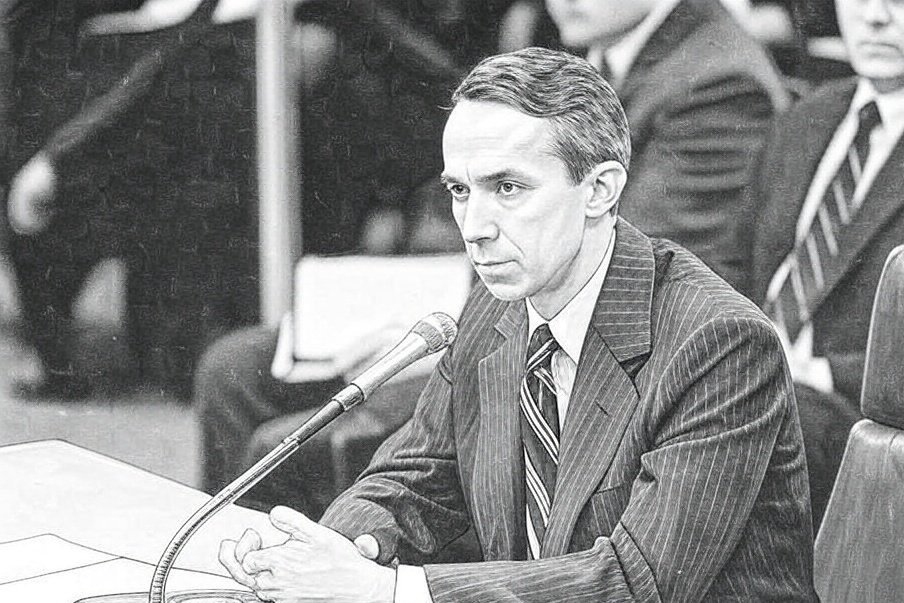
Retired Supreme Court Justice, David Souter, Dies at 85
Retired Supreme Court Justice David Souter, appointed by President George H.W. Bush in 1990, died Thursday at his New Hampshire home at 85. Despite his Republican nomination, Souter became a reliable liberal voice during his 19-year tenure, prompting the GOP rallying cry “No more Souters” to avoid justices who might shift left.

What is the Supreme Court’s “Shadow Docket?”
The Supreme Court of the United States, often seen as the pinnacle of judicial transparency with its public hearings and detailed opinions, has a lesser-known side: the shadow docket. This term, which has gained traction in recent years, refers to a collection of decisions and actions the Court takes outside its regular, public merits docket—the process where cases are argued in open court and rulings are issued with comprehensive written opinions. The shadow docket, by contrast, operates with far less visibility, often involving emergency orders, procedural rulings, and other decisions made swiftly, without oral arguments or extensive explanations. Despite its lower profile, the shadow docket can have profound impacts on American law and policy, raising questions about transparency and accountability in the nation’s highest court.
Supreme Court Allows Military Transgender Ban
On Tuesday, the Supreme Court granted the Trump administration’s request to implement a Department of Defense policy banning transgender individuals from serving in the U.S. military, lifting a federal judge’s nationwide injunction. The unsigned order, issued without explanation, permits the policy to take effect as litigation continues in the 9th Circuit and potentially returns to the Supreme Court. Justices Sonia Sotomayor, Elena Kagan, and Ketanji Brown Jackson, the court’s liberal appointees, dissented, indicating they would have denied the government’s request, though they provided no reasoning.
Meet Ross J. Fodera, Esq.

Ross J. Fodera, Esq. is the founder of the Fodera Law Firm and specializes in small business legal services, including employment disputes, real estate transactions, corporate formation, contract disputes, and risk management. Since becoming an attorney Mr. Fodera has been involved in a number of six-figure settlement negotiations, EEOC proceedings, and real estate litigation. Mr. Fodera takes pride in providing affordable services and effectively communicating with clients so they understand every stage of their representation. Mr. Fodera is barred in the District of Columbia and Massachusetts.
In a significant policy shift, federal prosecutors in the District of Columbia have been directed to stop bringing felony charges against individuals solely for carrying rifles or shotguns. The new directive, confirmed by U.S. Attorney for D.C. Jeanine Pirro, stems from a Justice Department determination that the city's longstanding ban on the public carry of long guns is unconstitutional in light of recent Supreme Court precedent.